WSTDF insights: NYAS President Nicholas Dirks on why AI is reformatting science, not just accelerating it
2025-11-03
Artificial Intelligence is doing far more than simply speeding up calculations; it is fundamentally reshaping the paradigm of scientific inquiry. This was the core message delivered by Nicholas B. Dirks, President and CEO of the New York Academy of Sciences (NYAS), during an exclusive interview at the 2025 World Science and Technology Development Forum (WSTDF).
Dirks, a recipient of the 2024 Chinese Government Friendship Award, sat down with reporters in Beijing to discuss how the global scientific community can harness AI while navigating its inherent risks.
Beyond Speed: A Capability Revolution
"AI is essentially machine learning, a technology that has evolved over decades since the term was coined at Dartmouth College in 1956," Dirks noted. However, he emphasized that the current era represents a tipping point where AI is shattering traditional research boundaries.
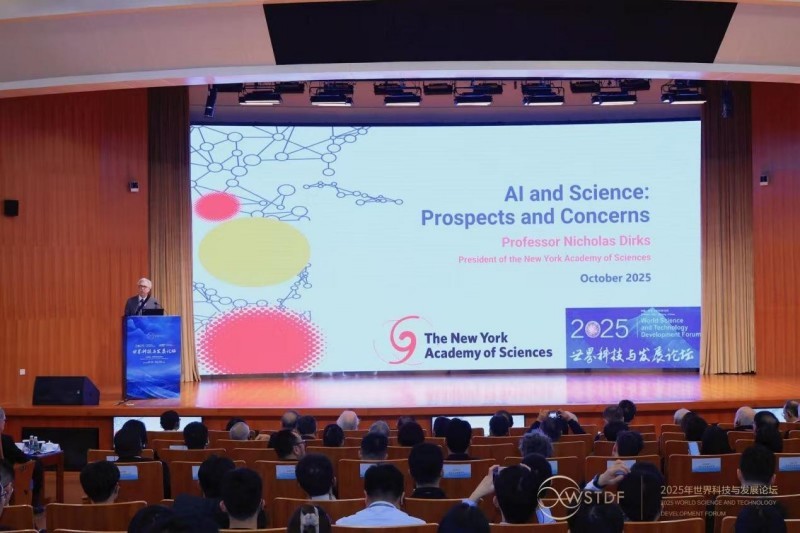
Citing examples ranging from DeepMind's AlphaFold—which deciphered protein coding and identified protein folding processes—to AI systems that now outperform humans in diagnosing lung cancer from medical imaging, Dirks argued that AI has enabled humanity to process "hyper-scale datasets that no single scientist or team could handle alone."
However, he cautioned that this new power is fragile. "Data quality is the core premise," Dirks warned. "The quality of the experiment depends on the quality of the data." He urged the scientific community to adopt rigorous validation standards to ensure databases are "fit for purposes" and reliable.
Balancing Risk and Innovation
While acknowledging AI as a powerful engine for discovery, Dirks addressed the forum's theme—AI for Science and Development—by highlighting the dual nature of the technology.
He frankly discussed potential dangers, noting that AI could be used for "malign purposes."
• Cognitive Bias: "In a sense, AI can become a reflection of the 'worst aspects' of human cognition," Dirks said, referring to the technology's tendency to replicate or amplify human stereotypes and discrimination.
• Existential Threat: He pointed to the risks associated with autonomous lethal weapons.
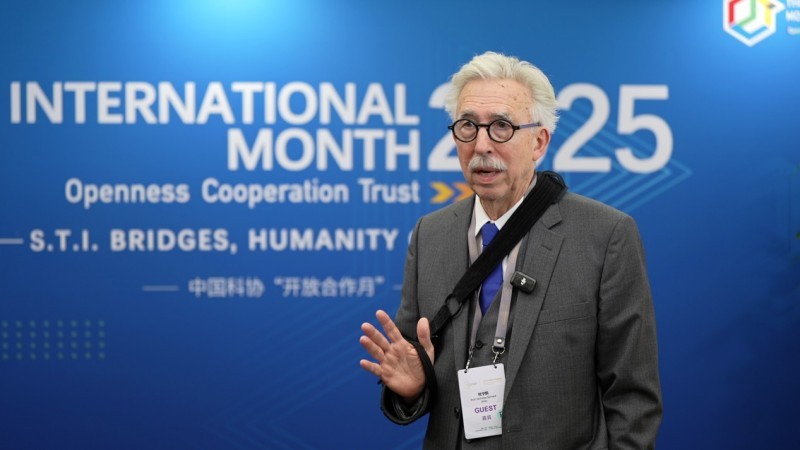
Despite these concerns, Dirks firmly opposed calls to pause or halt AI research. "Looking at human history, every technology—from the internal combustion engine to nuclear fission—has brought new opportunities alongside new challenges," he stated. "The key is not to stop, but to find ways to optimize the application of the technology."
Adapting Education for a Faster Future
Dirks predicts that the "rhythm of future research will be faster than in any previous era," a shift that demands a transformation in education.
He argues that the siloed approach to education is no longer viable. Future scientists must possess deep domain knowledge while also mastering the "basic cognitive principles of AI." This requires an interdisciplinary educational model that integrates science, mathematics, and AI skills, fostering a mindset capable of viewing research problems through a broader lens.
"This change is not just about speed; it is a transformative paradigm reconstruction," Dirks concluded. "The core of this transformation lies in the effective synergy between human wisdom and machine intelligence. Only by building a mechanism for continuous interaction can we truly harness AI."
This article is an English adaptation of a report originally published by Guangming Net. It has been summarized and localized for an international audience.