Global experts unite at UN forum to advance One Health approach for sustainable development
2025-05-16
More than 300 health experts and policymakers from 34 countries participated in a virtual discussion on implementing the One Health approach during the recent UN Science, Technology and Innovation Forum. The high-level side event, titled "One Health for All," was organized by the Chinese Preventive Medicine Association (CPMA) with support from leading global health organizations.
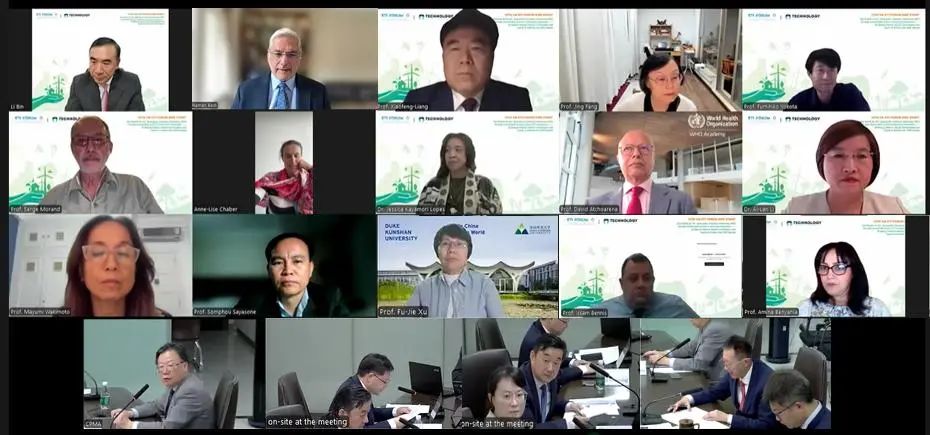
Co-chaired by Li Quanle, Deputy Secretary-General of CPMA, and Zhou Xiaonong, Vice Chair of the CAST Consortium on Life Sciences and Human Health and Chair of the WFPHA One Health Working Committee, the meeting underscored the critical role of the One Health approach in accelerating progress toward the United Nations Sustainable Development Goals (SDGs). It called for broader local-level implementation to enhance preparedness against emerging health threats.
Li Bin, President of CPMA, emphasized in his opening remarks that the One Health concept aligns closely with multiple SDGs, holding strategic significance for realizing the 2030 Agenda for Sustainable Development.
Li Ailan, Assistant Director-General of the World Health Organization (WHO), stressed that One Health must be science- and technology-driven to foster innovation and evidence-based solutions. She noted that One Health is a top priority for WHO and will continue to be promoted under the Global Health Strategy 2025.
Keynote speakers, including Serge Morand from the Quadripartite One Health High-Level Expert Panel, Ren Minghui of Peking University Global Health Institute, Mayumi Wakimoto, Co-Chair of the WFPHA One Health Working Committee, Shi Xiaoming, Deputy Director of Chinese Center for Disease Control and Prevention, and Xu Fujie, Professor at Duke Kunshan University, advocated for integrating One Health into pandemic prevention systems, reducing health inequities, and supporting sustainable development to build more resilient health systems worldwide.
A significant portion of the forum focused on operational tools, particularly the Global One Health Index developed by Shanghai Jiao Tong University researchers. Following presentations on the framework's methodology and real-world applications in Japan by Professor Fumihiko Yokota, WHO Science Director David Atchoarena unveiled plans to incorporate these tools into a new global training initiative for health professionals.
During a roundtable discussion, experts including Liang Xiaofeng, Vice President of CPMA, Vice Chair of CAST Consortium, and Executive Committee Member of WFPHA; Jessica Kayamori Lopes from WHO Western Pacific Regional Office; Fang Jing, Quadripartite One Health Expert Group; and others explored innovative governance mechanisms, stressing the importance of One Health governance and multisectoral collaboration in achieving sustainable development.
In closing remarks, Benyahia Anima, Executive Director of WHO One Health Initiative Office, and Raman Bedi, Vice President and Incoming President of WFPHA, called for strengthening One Health governance, improving global capacity to address complex health threats, and adopting innovative models and tools to safeguard human health, ecosystem balance, and SDG attainment.
The GOHI expert consensus and application initiative established during the meeting lays a foundation for enhancing One Health governance and cross-sector collaboration. As health and environmental challenges grow increasingly complex, the One Health framework offers a scientific pathway toward sustainable development, guiding efforts to secure a healthier, more sustainable future for all.
Source: Guangming Online, VOC